What is PCOS (Polycystic Ovary Syndrome )?
So What is PCOS :
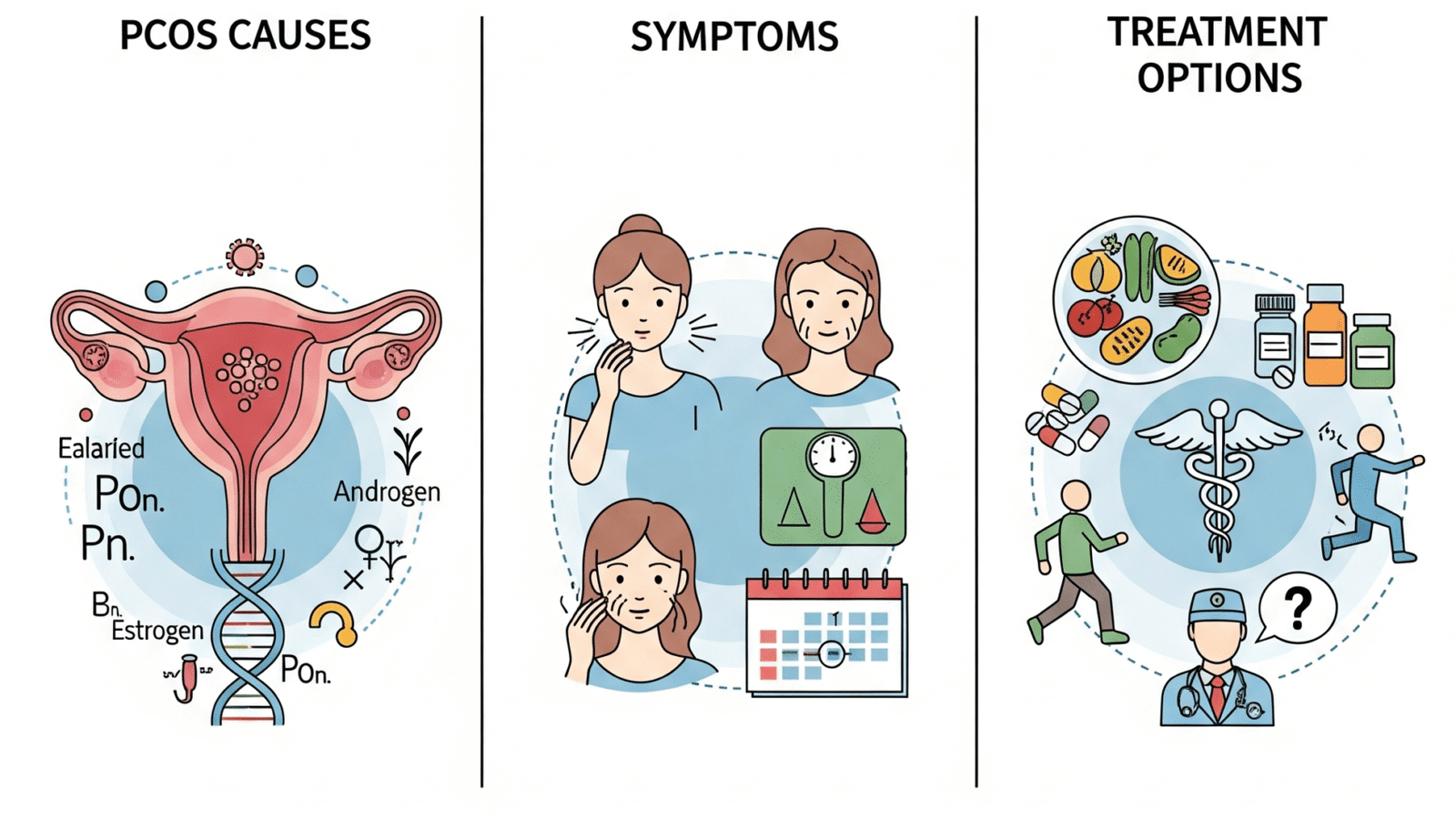
Polycystic Ovary Syndrome (PCOS) is a hormonal condition that affects many women of reproductive age. It occurs when the ovaries produce higher-than-normal levels of male hormones (androgens) and when the balance of reproductive hormones is disrupted.
This hormonal imbalance can lead to:
Irregular or missed periods
Difficulty with ovulation
Acne and oily skin
Excess facial or body hair
Weight changes
Fertility challenges
The good news: PCOS is very common and treatable, and many women live healthy, fulfilling lives with appropriate care.
Causes of PCOS (Etiopathogenesis)
Why Does PCOS Happen?
PCOS does not have a single cause. It develops due to a combination of metabolic, hormonal, genetic, and lifestyle factors.
1. Insulin Resistance
Many women with PCOS have insulin resistance, meaning the body does not respond normally to insulin. This can lead to:
High insulin levels
Increased androgen production from the ovaries
Difficulty managing weight
Irregular ovulation
2. Hormonal Imbalance
PCOS is characterised by disruption of key reproductive hormones:
LH (Luteinizing Hormone) – relatively high
FSH (Follicle-Stimulating Hormone) – relatively low
Androgens (testosterone, DHEAS) – elevated
Progesterone – low due to lack of ovulation
This imbalance prevents normal egg development each month.
3. Genetic Factors
PCOS often runs in families. If a mother or sister has PCOS, the risk may be higher.
4. Lifestyle & Environmental Factors
Stress, poor sleep, and sedentary habits can worsen symptoms, but they are not the root cause. PCOS is not your fault.
Symptoms of PCOS
Common Symptoms of PCOS
Symptoms vary from woman to woman. Some may experience many symptoms, while others have only a few.
Menstrual & Reproductive Symptoms
Irregular or missed periods
Very light or very heavy bleeding
Difficulty conceiving
Irregular or absent ovulation
Skin, Hair & Hormonal Symptoms
Excess facial or body hair (hirsutism)
Acne or oily skin
Hair thinning or hair loss on the scalp
Metabolic & Weight Symptoms
Weight gain or difficulty losing weight
Darkened skin patches on the neck or underarms (acanthosis nigricans)
Emotional & Mental Health
Mood swings
Anxiety or depression (common but often overlooked)
Diagnosis Section
How is PCOS Diagnosed?
PCOS is diagnosed using a combination of clinical assessment, blood tests, and imaging.
1. Clinical Evaluation
Menstrual history
Acne, hair growth, and weight patterns
2. Blood Tests
Tests may include:
Androgen levels (testosterone, DHEAS)
LH and FSH
Insulin and glucose levels
Thyroid and prolactin (to rule out other conditions)
3. Pelvic Ultrasound
Ovaries may appear enlarged or show multiple small follicles.
Important: You do not need cysts on the ovaries to be diagnosed with PCOS.
Types of PCOS (Optional Educational Section)
Types of PCOS
(These are not official categories but help understand symptom patterns.)
Insulin-Resistant PCOS (most common)
Inflammatory PCOS
Post-Pill PCOS (temporary)
Adrenal PCOS (high DHEAS)
Treatment is personalised depending on the dominant pattern.
Is PCOS Curable?
Is PCOS Curable?
PCOS is not permanently “curable,” but it is highly manageable.
With proper treatment and lifestyle changes:
Periods can become regular
Symptoms can stabilise
Fertility can often be restored
Treatment Section
How is PCOS Managed?
Treatment depends on individual goals—cycle regulation, symptom control, weight balance, or fertility.
1. Lifestyle Management (Foundation for All Patients)
Diet
Balanced nutrition—not crash dieting:
High-fiber vegetables
Lean proteins
Whole grains
Healthy fats
Reduced refined sugars and processed carbs
Exercise
At least 150 minutes per week:
Walking
Strength training
Cardio
Sleep & Stress
7–8 hours of sleep
Yoga, meditation, mindfulness
2. Medical Treatment
For Irregular Periods
Combined oral contraceptives (OCPs)
Cyclic progesterone therapy
For Acne & Excess Hair
OCPs
Anti-androgen medications (e.g., spironolactone)
For Insulin Resistance & Weight
Metformin
Other metabolic medications (selected cases)
For Fertility
Ovulation induction (Letrozole – first line)
Injectable medications
IVF when required
PCOS & Fertility
PCOS and Fertility
PCOS is one of the most treatable causes of infertility.
The primary issue is irregular ovulation, which can usually be corrected with:
Lifestyle changes
Medications
Assisted reproductive techniques (if needed)
Many women with PCOS conceive naturally once cycles become regular.
Long-Term Health Risks
Long-Term Health Considerations
Women with PCOS may have a higher risk of:
Type 2 diabetes
Cholesterol imbalance
High blood pressure
Sleep apnea
Endometrial thickening
Regular follow-ups help prevent these complications.
Menu / Services Page Structure
Menu Title:
PCOS Services at Our Centre
1. Conservative & Medical Management
(Use cards or accordion layout)
Hormonal regulation
Metabolic & weight management
Skin & hair treatments
Emotional & long-term care
2. Fertility & Reproductive Services for PCOS
Ovulation induction
IUI
IVF (PCOS-safe protocols)
ICSI & FET
OHSS prevention
3. Surgical Services
Laparoscopic ovarian drilling (selected cases)
Management of associated conditions
Bariatric surgery referral (selected patients)
4. Diagnostic & Supportive Services
Hormonal & metabolic testing
Ultrasound & follicular monitoring
Lifestyle & wellness programs
5. PCOS Care Packages
(Excellent for conversions)
PCOS Evaluation Package
PCOS Weight & Metabolic Program
PCOS Fertility Package
PCOS Skin & Hair Care Plan
PCOS Long-Term Monitoring Program